

The Paragon side event at Nationals was a huge success! On July 23rd, we had 36 players stay late into the evening to play 2 rounds of Paragon multiplayer, for a total of 21 games. I was overwhelmed by all the enthusiasm, and it was clear by the laughter around the tables that our community has really needed a casual multiplayer format like this.
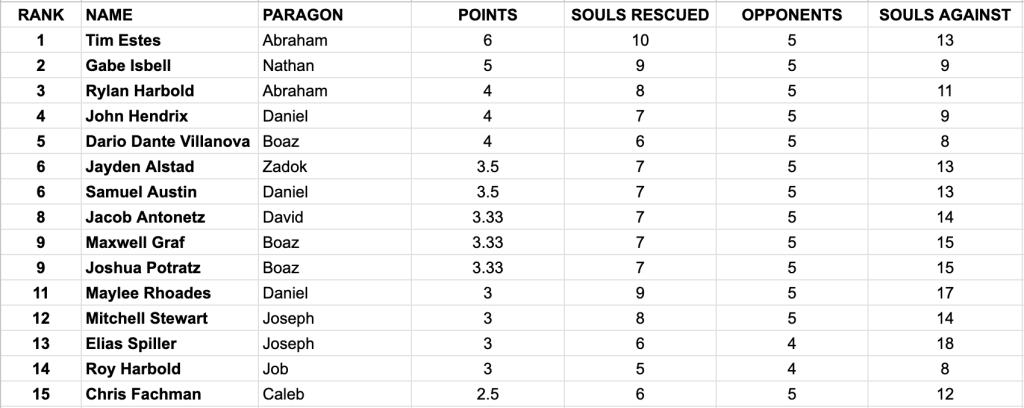
The top 15 finishers are listed below. Click here for the full results.
I shared all these results on the Redemption Discord server following the tournament, but I should have posted them here as well. I suppose they are better late that never.
Sorry for the delay. This past month has been insanely busy with both family stuff and work stuff, and what time I had left was taken by a more urgent Redemption task. But now I am finally ready to share my thoughts about the Paragon side event, what went well, what could use improvement, what's coming soon, and more.
Side Event Recap
After a long day of Booster Draft and Type 2, everyone took a quick break for dinner. As the Paragon players returned, I checked their decks and gave them their free Paragon Intro Pack for participating.
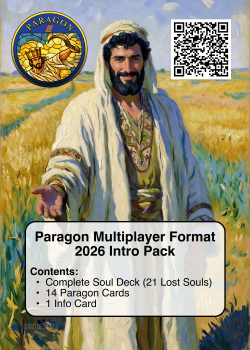
NOTE: If you want to get one of these packs, one now comes with each purchase of a pre-built Paragon deck from Your Turn Games, while supplies last.
Although I was in a hurry, it was fun to see everyone's decks. There were 19 different Paragons represented, and players built their decks in different creative ways, making use of cards and strategies they never would in regular Redemption.
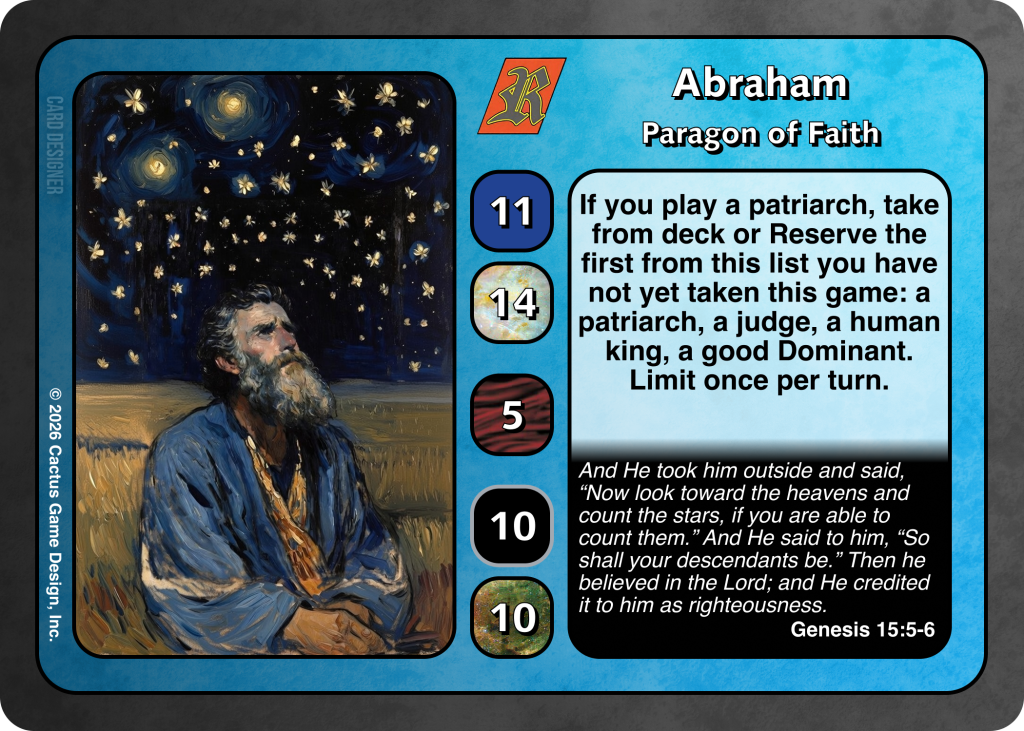
In case you are curious, there were only 4 Paragons chosen by more than 2 players each: Daniel (6 players), Boaz (4 players), Joseph (4 players), and Job (3 players). The Daniel and Boaz Paragons were particularly popular because both work well with the white Daniel offense, which is especially strong within the Paragon card pool. Though in the end, the top Daniel and Boaz players "only" earned 4th and 5th place, respectively, while the two Abraham players took 1st and 3rd place, and the lone Nathan player took 2nd.
Anyway, once everyone was ready, I divided up the players into 12 groups for 3-player games. For the first round, I matched up Iron Man players against each other, so that the games could count for that competition as well. I also tried to make sure no one matched up against another player from their home region, so that everyone was making new friends and every table had a few regions represented.
For the second round, I reassigned everyone into pods of 4 for a round of 4-player games, though a couple players had to drop out due to the lateness of the hour, so a couple tables only had 3 players. This time, the groupings were based purely on ranking like a regular tournament (not making any adjustments for Iron Man or home region).
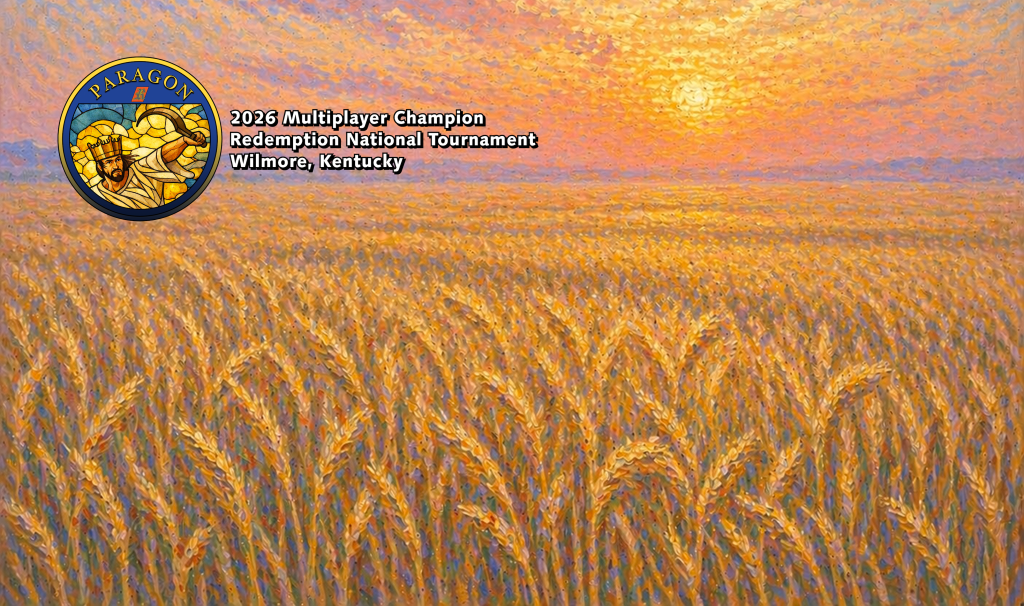
In the end, BaboonyTim was the only player to earn a full win in both games, giving him 1st place. He was followed by Gabe (a Redemption elder), Rylan (the young winner of Type A the next day), and John (part of this Nationals' hosting team). As the top 4 finishers, each of these gentlemen won an exclusive playmat. Yes, I know 4 prizes is an unusual number, but if we had even 1 more participant, then it would have been possible to have 4 undefeated players after the 2 rounds, and I was not about to have only 3 playmats to give out in that scenario.
The playmat depicts a field of grain, connecting it thematically to the format's Harvest Time logo, the Boaz image on the front of the intro packs, and even the tournament's official Ruth promo. If it is taken metaphorically as Harvest Time's harvest field, then it also works nicely as a mat to hold the soul deck and the table's shared Land of Bondage.
As you can see in the full results, players were ranked by most points, then most souls rescued, then most opponents faced, then fewest souls rescued by those opponents. If the points look funny to you, note that just like in traditional multiplayer, the total number of points earned at each table is equal to the number of players at that table. For example, if there are 4 players in a game, and someone earns a full win (earning the regular 3 points for that), there is 1 point leftover awarded to the player in second. That way, having more players at your table isn't necessarily a disadvantage.
The Highlights
The most obvious highlight of the event was how many people participated. 36 players is an amazing turnout for a side event, especially one that had to start so late in the evening (even later than originally scheduled). I am very grateful for everyone who stuck around to play. But I'm even more grateful for all the enthusiasm that these players had. The positive feedback and encouraging words truly touched me. One player even told me that the Paragon side event was what convinced him to attended Nationals this year.
Yet I think the greatest highlight of the event was seeing all the fun and laughter around the game tables. Whether winning or losing, players young and old were having a great time. Regular competitive Redemption is obviously a wonderful thing, but casual multiplayer is a very different experience, one that the Redemption community has been missing, even if we didn't all realize it. And as Paragon seems to have fixed the issues with traditional multiplayer, this experience is as fun as it has ever been.
Looking around the room, I could tell that the format was a success. Despite any quirks in the rules that we still need to work out, and whether or not the format continues to grow and lasts the test of time, it is clear that the primary objective has been achieved: we have a multiplayer format that actually works and that produces all the fun and laughter that only multiplayer shenanigans can.
The Pain Points
I am extremely happy with how the evening went. But I was also going into this first big Paragon event hoping to get feedback and gain new insights, and as expected, it revealed a couple areas for improvement.
The main issue I found is that the deck-building rules are kinda complicated for a format that is meant to be inviting even to new players. The Paragon features Tim added to RedemptionCCG.app are extremely helpful for deck building, but despite that, many players expressed confusion about what cards count as each type, and how to make sure their decks are legal.
I am currently exploring ways to make it simpler without forfeiting the balance provided by the current system. Nothing is settled yet, but there is one main possibility that I may share on Discord for feedback soon. In vague terms, this possibility would make the requirements for types and quantities much more flexible, but the requirements of brigades a little more restrictive.
The other issue is that Daniel the Treasured (the Hero from T2C, not Daniel Paragon of Insight) seems too strong for the format. This is a consequence of the available card pool, not a problem with the format itself. The CBP combination of protection and choosing the blocker is hard to counter within the Paragon card pool. There are ways to remove him outside of battle, but once he attacks he is very likely to rescue a soul with little other investment needed. We already knew he was the strongest Hero in the format, but he proved game warping in the side event, and several players afterwards asked me if Daniel the Treasured would be banned.
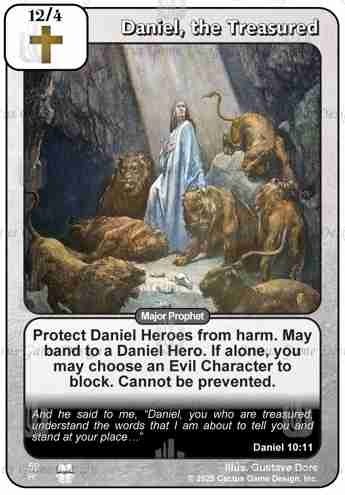
The good news is that I don't think Daniel is going to be so overpowered anymore. Today, the Redemption Elders announced a major rules update to "choose opponent" abilities. These abilities can no longer target characters that your opponent doesn't own, such as Canaanites you've given. That's a huge nerf. The effect is still plenty strong in Paragon multiplayer, as it still enables you to decide which opponent will be the defending player, but at least that player will be using one of their own characters, allowing the use of enhancements and other interaction.
Because of that rules update, I don't think a ban is necessary. At the very least, we can first see how the "meta" adjusts to not only the new rules, but also the new cards in Roots 2 and End of Times.
Coming Soon
Speaking of those new card sets, I am thrilled to see what kind of Paragon possibilities they open up. Although Roots 2 isn't yet tournament legal, Paragon is a casual format, so you are free to add Roots 2 cards whenever you want. There are many cards in the set that could shake up the format, and others that seem just plain fun in multiplayer. Maybe soon I'll share a list of cards I'm most excited to use in Paragon.
From my end, you can look forward to more exciting Paragon updates in the coming months. As promised, I am currently working on revising all the Paragons (and adding brand new ones). I don't know exactly when these will be ready to share, but most likely it will be after the release of End of Times. After all, I'll need to take that set into account for Paragon balance. But in the mean time, I'll be sure to post previews and perhaps solicit feedback.
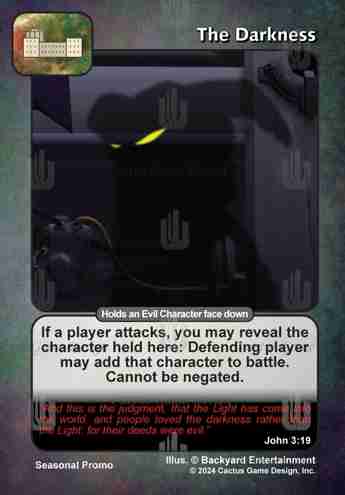
There will also be rules adjustments as needed. One fun change will be the legalization of some promo cards for Paragon, probably around the same time that the Paragons are officially updated. The list of promos is not yet settled, but it will take into account the results of the polls I posted a while back. One promo that will definitely be legalized is The Darkness, as the card basically only has a purpose in multiplayer. If players actually use it, maybe it will even help keep Daniel the Treasured in check.
How to Get Started
If you haven't yet tried out the Paragon format for yourself, I highly encourage it! For more information, you can check out LandOfRedemption.com/Paragon for the format's hub and all the relevant documents.
To obtain a deck, consider buying one of Your Turn Games' pre-built Pargon decks. Each one is a complete Paragon-legal deck, already sleeved, boxed, and ready to go. They even come with dice and, while supplies last, a 2026 Paragon Intro Pack, containing 14 physical Paragon cards and an entire 21-card Lost Soul deck for your table to share!
To build your own deck from scratch, the deck building tool on RedemptionCCG.app is invaluable. The features there will filter cards for format legality, provide images of all the current Paragons, and most importantly keep track of all the deckbuilding requirements and card quantities for you. The app makes deck building significantly faster and easier. You can goldfish with the decks you build, or even use them to play online, though only 2-player games are currently supported for that.
If you have any questions about the format, or if you just want to connect with other Paragon players, I recommend checking out the #unofficial-formats channel on the Redemption Discord server.
How to Help
I am always looking for feedback. If you've played Paragon, please let me know what you think. I want to know what you like about it, what you wish were different, which Paragons seem too strong or too weak, which characters you want added as new Paragons, any fun gameplay stories, and any suggestions you have for the future. The easiest way to contact me is on the Discord server (where my username is Ear-A-Corn).
But if you really want to help the format grow, the most helpful thing you can do is to share it with your friends. Talk about it online and encourage your buddies to try it out. If you have an in-person playgroup, consider building a suite of decks for others to borrow so they can experience a game firsthand. I've even had success introducing Paragon to a brand-new Redemption player (he'd only ever played a couple games with starter decks), so if you're bringing the decks, don't be afraid to play it with newbies. Once you are comfortable teaching the format, you may even consider introducing it to other gamers who haven't played Redemption at all yet. A casual multiplayer format could be a great way to introduce Redemption to a group of gamers, especially if they're already into things like MtG's Commander.
Thanks for reading!
To buy singles, sealed product, and other gaming supplies mentioned, please visit our sponsors!